When buying from a blank apparel wholesaler, purchasing is never a single transaction. It is two completely separate commercial commitments: you buy the physical blank from a supplier, and you buy the decoration service from a decorator.
Two distinct vendors. Two production schedules. Two distinct invoices.
A single purchase order cannot cover both legs of this journey because the parties, units of measure, and data requirements sit on entirely different planes. Yet across the promotional, print, and apparel industries, hundreds of distributor and decorator teams still manage this split by hand.
When sales reps manually split orders, calculate interdependent ship dates in their heads, and re-key decoration specs into PDFs, profitability erodes. PromoLink eliminates this administrative burden through automated, Sales Order and Purchase Order order splitting and native industry integrations.
Where the Manual Process Breaks Down
When distributor operations rely on manual double-entry, order handoffs fail in five predictable places:
1. The Inverted Ship-To Address
The blank PO must ship to the decorator, while the decorated order ships to the customer. When coordinators build these documents in fragmented windows, addresses get swapped. Blanks arrive at an end client's office unprinted, or finished goods return to the mill. Deadlines evaporate, and freight costs double.
2. Blind Lead-Time Sequencing
A decorator cannot thread a machine without garments on the floor. Working backward from a hard in-hands date requires calculating blank transit days, check-in staging, production line schedules, proofing buffers, and outbound freight. When these POs are written separately, this critical math lives only in the sales rep's head.
3. Dropped Decoration Details
Decoration specs collected at the sales stage, including Pantone matches, placement measurements, thread codes and art files, often fail to transfer cleanly onto the decoration PO. If a field drops, production stops while the decorator calls to clarify, pushing the job out of its assigned press window.
4. Asymmetrical Minimum Order Quantities (MOQs)
A customer order may clear the supplier's case-pack minimum but fall short of the decorator's screen printing minimum, or vice versa. Uncovering an MOQ shortfall after orders are issued leads to emergency margin sacrifices or uncomfortable customer conversations.
5. Post-Quote Price Drift
Dynamic supply chains mean blank prices fluctuate, surcharges shift, and decoration tables change. If quoting relies on static spreadsheets, margin drift only becomes obvious when the accounting team attempts two-way invoice matching weeks later.
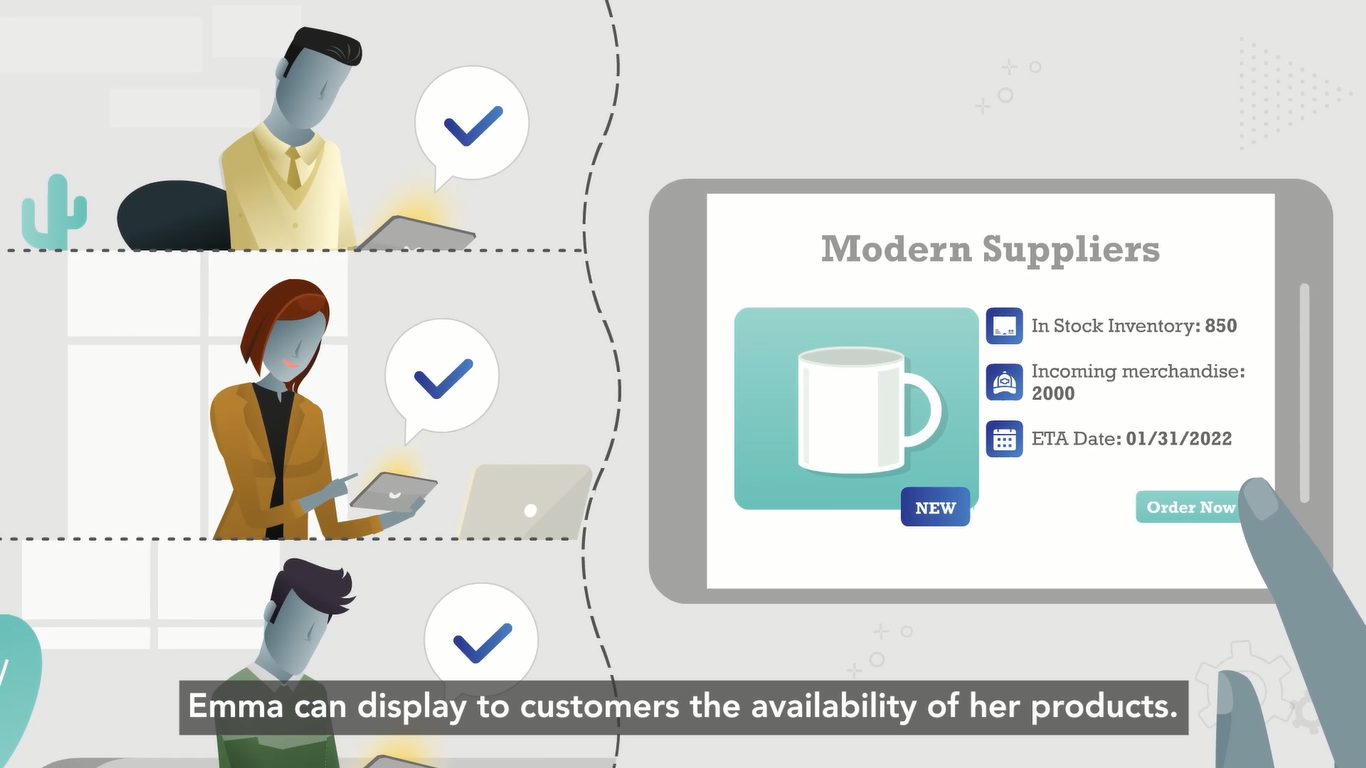
This is where the source of the price matters. Supplier Index retrieves pricing and inventory from the supplier's own system using your account credentials, rather than serving a stored catalog figure, so the number behind the quote is the number the supplier is working from.
Industry data confirms the scale of the problem: historical benchmark studies indicate that up to 16% of delivered orders contain operational errors and 17% miss delivery dates. In fact, major industry suppliers report that on roughly 75% of incoming orders, critical production information is missing upfront.
The root cause is rarely negligence; it is the structural mismatch of using manual tools for dual-vendor workflows.
The Internal Trap: In-House Decoration Shops
Distributors with internal screen printing, embroidery, or signage facilities often skip the second purchase order under the assumption that internal work needs no formal paperwork.
Skipping the internal PO introduces three major operational blind spots:
- Eroded Margin Transparency: Without a formal document booking internal labor against the order, true cost-of-goods-sold (COGS) stays hidden. Jobs appear artificially profitable, prompting reps to underprice future work.
- Obscured Floor Capacity: If contract decorating jobs generate paper while internal jobs rely on slack messages or verbal cues, production leads cannot accurately forecast shop capacity over a two-week horizon.
- Missing Work Orders: The production floor receives fragmented emails instead of a structured specification sheet containing placement metrics, vector files, proof signatures, and stitch breakdowns.
The Fix: Standardize the Internal Shop
Treat your internal decoration department exactly like an external trade partner: give it a Supplier Index profile, dedicated work queues, distinct labor pricing tables, and automated cost assignments. The second PO generates automatically, functioning as a clean, standardized work order for your shop floor.
Handling Customer-Supplied Goods (Cut-and-Sew / Contract Only)
In pure contract decoration, the distributor or client supplies the blanks directly. Because PromoLink decouples the blank acquisition layer from the decoration layer, the system handles this workflow natively.
No blank PO is generated, yet the decoration PO preserves all run charges, location requirements, and vector art assets without requiring a dummy blank purchase order to trick the software.
Pricing Matrixes Beyond PromoStandards
While PromoStandards provides automated endpoints for supplier catalogs, real-time inventory, and purchase orders, the contract decoration sector remains largely unstandardized. Most decorators operate without electronic endpoints, relying instead on multidimensional rate cards:
- Embroidery: Scales on order volume against stitch counts (e.g., up to 5,000, 8,000, 10,000+ stitches).
- Screen Printing: Scales on order volume against color counts and imprint locations.
PromoLink bridges this gap with a two-axis matrix engine inside the Supplier Index. Even without an API endpoint, decorators receive structured pricing and uniform digital documentation, keeping the quote fully automated from the initial presentation to the final purchase order.
The Pre-Flight Checklist: Validating Before Transmission
To keep orders moving smoothly, an order management system must validate product records against both execution standards before sending documents to suppliers and decorators:
Blank PO Gate
-
Base SKU and variant IDs (size, color, finish) confirmed
-
Supplier-specific blank part numbers mapped
-
Live inventory confirmed and net account cost applied
-
Pack size and carton dimensions verified
-
Supplier MOQ rules satisfied
Decorated PO Gate
-
Decorator assigned (internal shop or contract partner)
-
Imprint methods explicitly mapped to each location
-
High-resolution vector files and placement mockups attached
-
Multi-axis charge tables applied (setups, run passes, digitizing)
-
Decorator line minimums satisfied
PromoLink runs this validation pass automatically. If a required field is missing, the system catches it before transmission. If a soft rule is broken (such as falling slightly below a preferred price break), it displays an actionable warning so the operator can adjust parameters without halting work.
How PromoLink Closes the Gap
Managing two purchase orders per job should not require twice the administrative work. Purchase Order automates the entire sequence within a single operational workflow:
- Automated Document Splitting: One sales order automatically generates two clean, correctly addressed POs. The supplier receives instructions to ship blanks directly to the decorator; the decorator receives complete artwork files, run guidelines, and the end customer's destination address.
- Intelligent Protocol Routing: If a supplier supports PromoStandards, PromoLink submits the order electronically via direct API. If a vendor or decorator works via email, the platform generates a structured PDF using standard data models. No custom configuration is required on a vendor-by-vendor basis.
- Unified Visibility for In-House Production: In-house print, embroidery, and sign shops operate inside the exact same operational framework as third-party vendors. Internal operations gain complete visibility over press queues, labor costs, and schedules without resorting to ad-hoc paperwork.
- Closed-Loop Reconciliation: As order status updates, advanced shipment notices (ASNs), and invoices return through electronic feeds or structured manual uploads, PromoLink balances both sides of the job against the original quote, protecting your net margins.
Pairing Purchase Orders With Your Order Source
A purchase order needs an order to act on, Purchase Order is paired with the sales channel your orders already arrive through. Four combinations cover the common setups:
Every combination includes Supplier Index and the same underlying PO infrastructure, so the routing, validation and reconciliation described above work the same way regardless of where the order originated.
Automating the dual-PO reality of decorated apparel lets you eliminate manual re-entry, keep deliveries on schedule, and protect order margins across every job.
See the package options at promolink.io/purchase-orders, or start a free Supplier Index account and see it against your own supplier list. 30-day free trial, no credit card required, cancel anytime.