supplier invoice reconciliation
It’s the end of the day, and just as you’re about to shut your laptop, an email pops up.
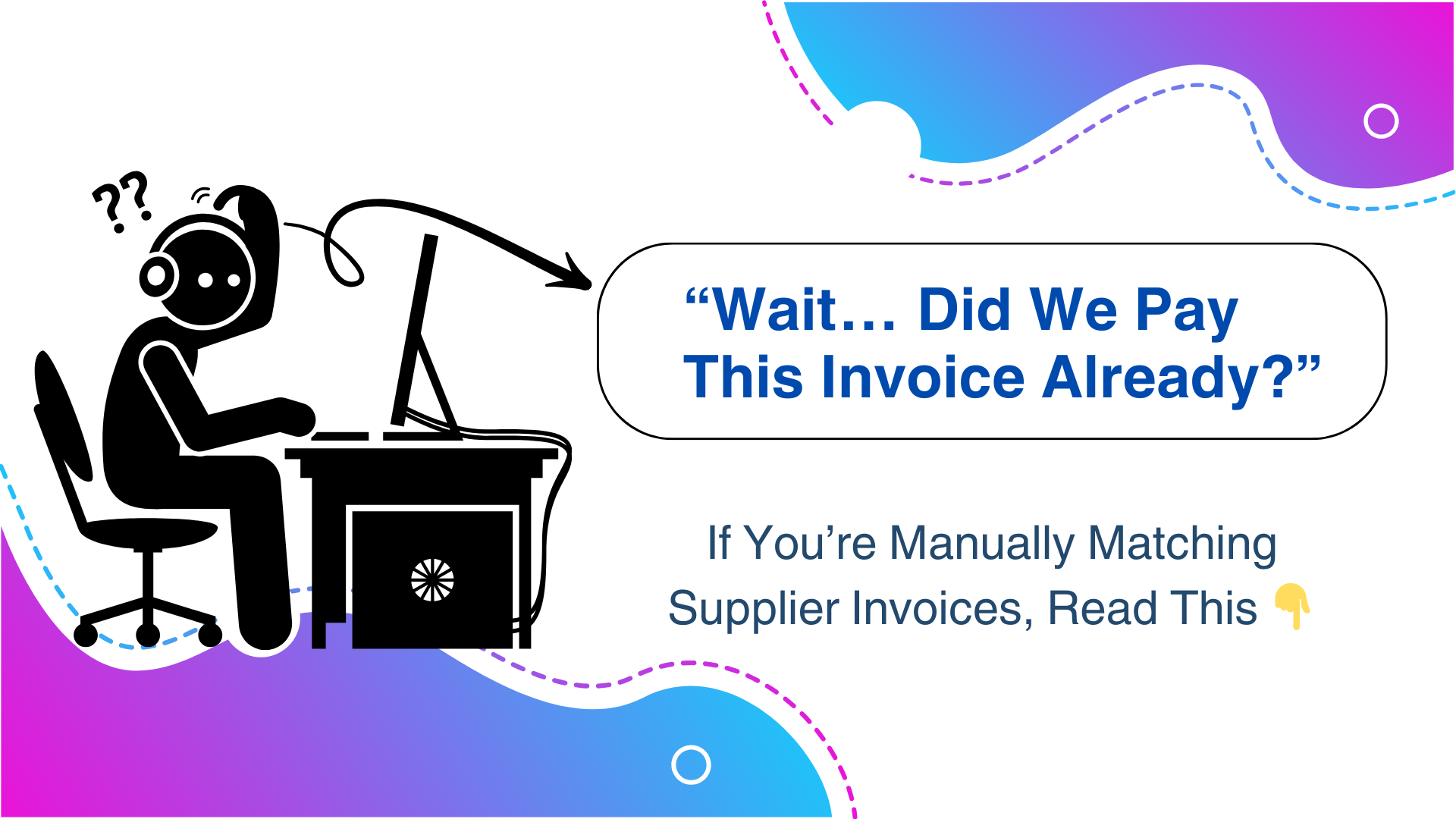
“Hey, did we already pay this invoice? I think I saw this charge last week.”
You pause. You check your system—no record. You dig through emails—maybe? You ask the team—no one is sure. Another 30 minutes disappear while you scramble to confirm if you’ve just double-paid a supplier.
If this sounds familiar, you’re not alone. Many businesses in the promotional products industry face supplier invoice reconciliation headaches every day.
“Hey, did we already pay this invoice? I think I saw this charge last week.”
You pause. You check your system—no record. You dig through emails—maybe? You ask the team—no one is sure. Another 30 minutes disappear while you scramble to confirm if you’ve just double-paid a supplier.
If this sounds familiar, you’re not alone. Many businesses in the promotional products industry face supplier invoice reconciliation headaches every day.
The Hidden Cost of Manual Invoice Reconciliation
Tracking supplier invoices shouldn’t feel like solving a mystery, yet for many in the promo industry, it does. Without a structured way to verify invoices against purchase orders and received shipments, businesses run into:
❌ Duplicate Payments
When invoices aren’t automatically matched to purchase orders, it’s easy to accidentally pay the same supplier twice —especially when multiple team members handle approvals.
When invoices aren’t automatically matched to purchase orders, it’s easy to accidentally pay the same supplier twice —especially when multiple team members handle approvals.
❌ Missing or Unpaid Invoices
A supplier calls, saying they never received payment, but you’re sure it was sent. Now it’s a frantic search through statements and emails to find out what happened.
A supplier calls, saying they never received payment, but you’re sure it was sent. Now it’s a frantic search through statements and emails to find out what happened.
❌ Time-Consuming Manual Matching
Sifting through emails, spreadsheets, and bank records to confirm if a supplier’s invoice is correct before approving payment slows down operations and increases the risk of errors.
Sifting through emails, spreadsheets, and bank records to confirm if a supplier’s invoice is correct before approving payment slows down operations and increases the risk of errors.
❌ Invoice & Shipment Mismatches
What’s billed doesn’t always match what was actually received. Without visibility into shipments, businesses risk paying for incorrect or missing items.
These challenges cost time, money, and accuracy—causing financial uncertainty and potential vendor disputes.
What’s billed doesn’t always match what was actually received. Without visibility into shipments, businesses risk paying for incorrect or missing items.
These challenges cost time, money, and accuracy—causing financial uncertainty and potential vendor disputes.
What If Invoice Reconciliation Was Effortless?
Now, imagine this:
✔️ Invoices are automatically matched to purchase orders , so you always know what needs approval—without the guesswork.
✔️ Discrepancies are flagged instantly , reducing financial mistakes and ensuring only accurate invoices are processed.
✔️ A clear view of invoice statuses —matched, needing review, or requiring adjustments.
✔️ Visibility into shipments ensuring invoices accurately reflect what was actually received.
The difference?
No more wasted hours hunting down invoices. No more double payments. No more “Did we pay this already?” moments.
How to Take Control of Supplier Invoice Reconciliation
If supplier invoice reconciliation has been an ongoing struggle, now is the time to explore
smarter, more efficient ways to manage your financial workflows.
Many businesses in the promo industry are already shifting toward automated invoice matching, centralized reconciliation, and seamless supplier integrations to reduce errors and improve cash flow.
Many businesses in the promo industry are already shifting toward automated invoice matching, centralized reconciliation, and seamless supplier integrations to reduce errors and improve cash flow.
Comments